
STEM Summer Camp Event
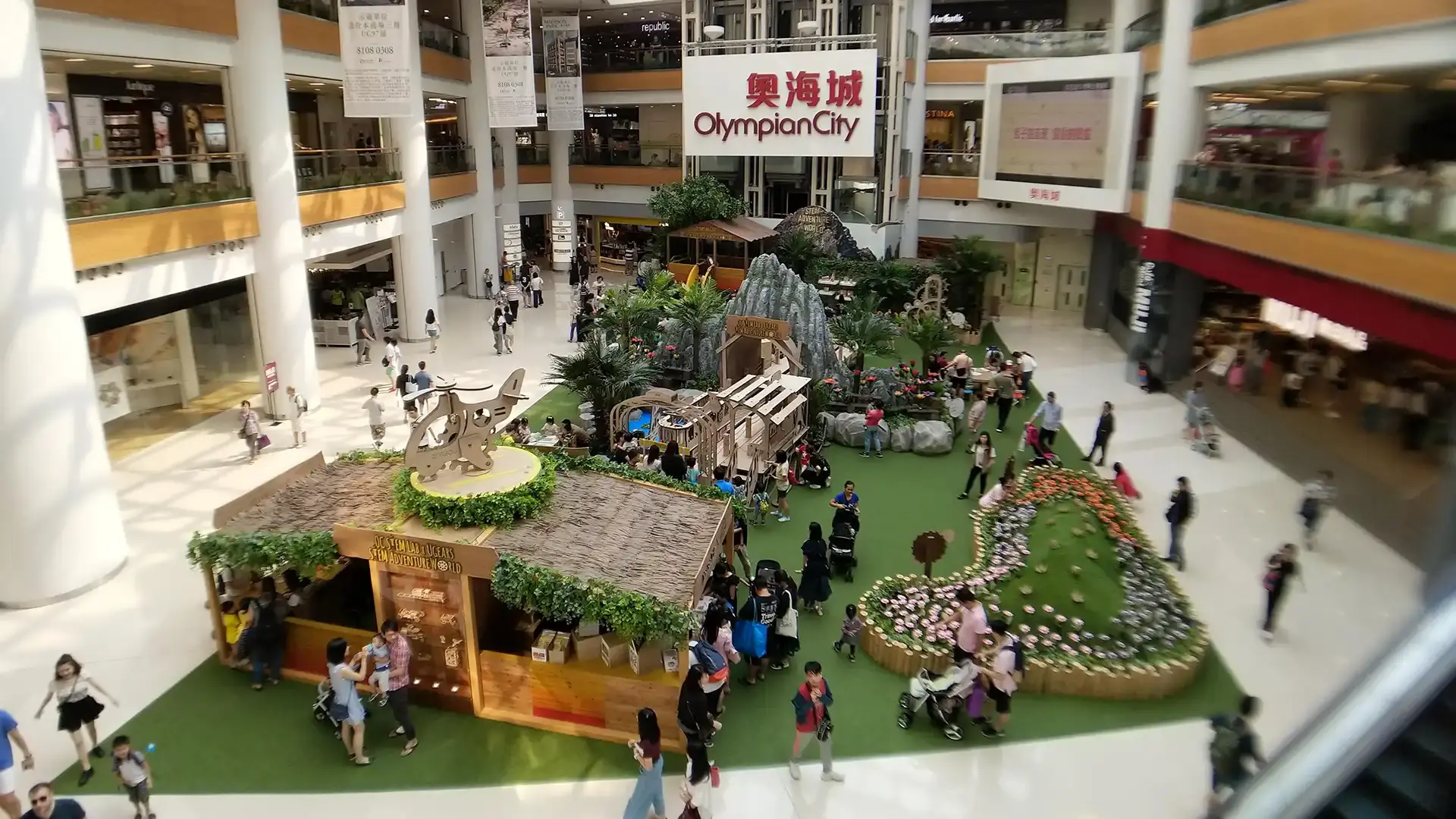
This STEM summer camp exhibition transformed wooden mechanical models into immersive installations in a shopping mall. By combining visual identity, spatial design, and hands-on interaction, the project turned STEM learning into an engaging public experience.
Client
Olympian City
Date
Aug 03, 2018
Author
UC DESIGN LAB
Location
Hong Kong
Background
This project was a cross-disciplinary STEM summer camp event design, co-created by a lifestyle concept store and a Ukrainian wooden mechanical model brand. Staged inside a shopping mall, the project transformed intricate wooden mechanical models into a large-scale immersive exhibition environment.
The core concept explored the collision between engineering logic and everyday aesthetics. Instead of presenting STEM knowledge through static displays, the exhibition was designed as a walkable spatial experience, allowing visitors to observe, understand, interact with, and eventually create through a guided learning journey.
Design Problem
Traditional STEM exhibitions and educational events often face several challenges:
Learning content can feel overly explanatory and lack immersive engagement
Engineering principles may appear abstract and difficult to understand immediately
Exhibition design, visual identity, and activity experience are often disconnected
A shopping mall exhibition needs to attract public attention quickly and encourage participation
The key design challenge was to translate STEM knowledge into a public exhibition experience that was spatial, interactive, educational, and visually memorable.
Design Positioning
The project was positioned as a walkable narrative system, integrating mechanical models, spatial installations, visual identity, and visitor circulation into one cohesive experience.
The exhibition journey was choreographed through a sequence of spatial stages: immersion, principle-led understanding, hands-on interaction, and personal making. This structure allowed learning to be experienced physically rather than simply explained verbally.
Visually, the design combined the precision of engineering with the warmth of lifestyle aesthetics. Timber materials, mechanical structures, clear wayfinding, and educational graphics were used to create a balance between technical logic and approachable public engagement.
Conclusion
By integrating thematic storytelling, visual identity, and spatial circulation design, this project transformed STEM education into an immersive and participatory shopping mall exhibition. The large-scale timber installations amplified the craftsmanship of the mechanical model brand while strengthening the educational value of the program.
Rather than simply telling visitors how engineering works, the exhibition allowed them to feel, explore, and understand STEM principles through direct spatial experience.